Quality Testing and Phytochemical Analysis on Bangkal Stem Simplicia Powder (Nauclea subdita) and Lime Juice as Traditional Body Scrub Ingredients
Pengujian Mutu dan Analisis Fitokimia pada Serbuk Simplisia Batang Bangkal (Nauclea subdita) dan Sari Jeruk Nipis sebagai Bahan Lulur Tradisional
DOI:
https://doi.org/10.58330/manganite.v2i1.330Keywords:
Bangkal Stems, Quality, SimpliciaAbstract
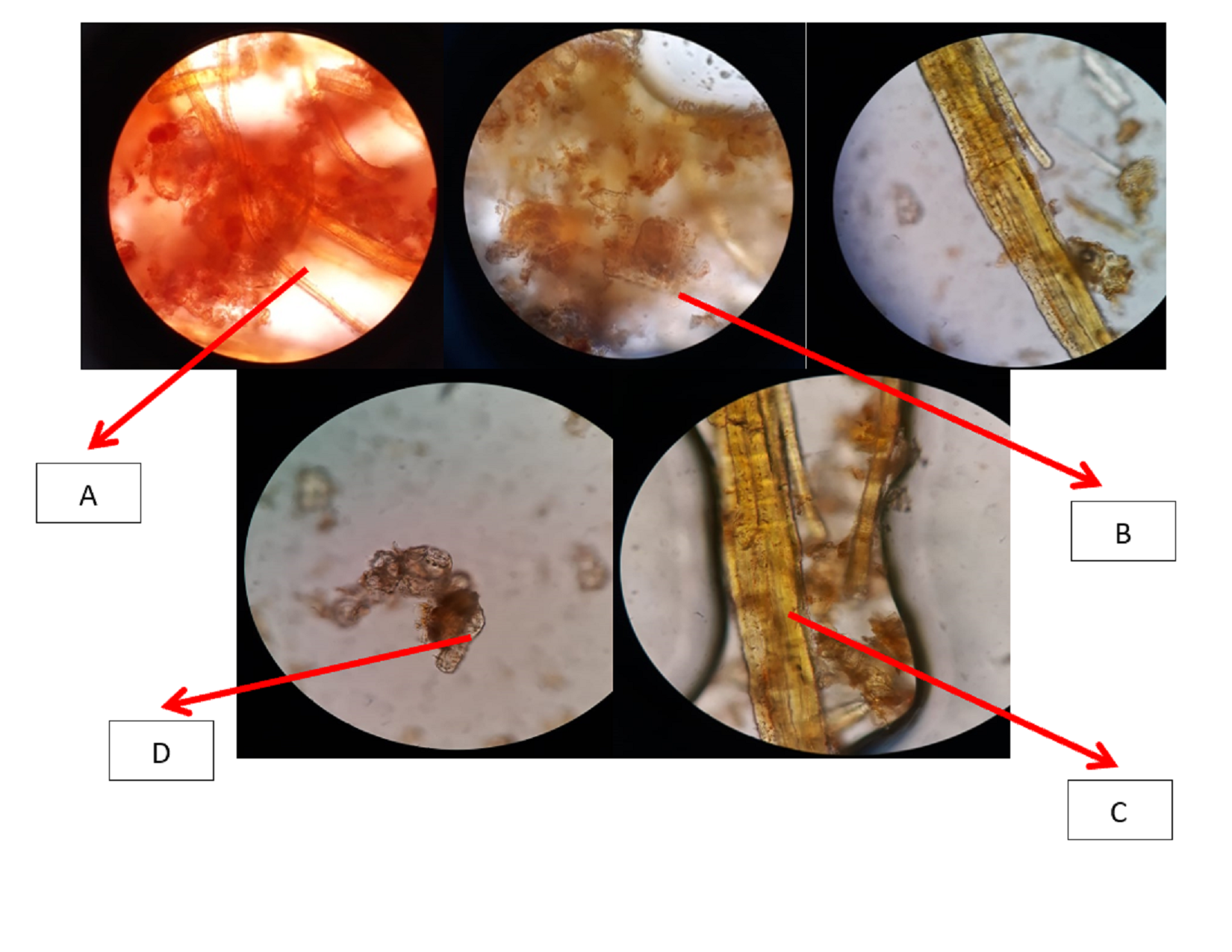
The bark of the bangkal stem is widely used as a traditional body scrub in the community with the addition of various other plants such as lime juice to maintain the health and beauty of the skin. The distribution of traditional lulurus in the market needs to be monitored for its quality so that consumers can use it safely. This study examined the quality of bangkal stem simplicia powder macroscopically and microscopically in the form of organoleptic tests, powder fineness tests, light microscopy tests, and phytochemical screening using the reagent method. The results showed that the bangkal stem simplicia powder had good organoleptic properties and the degree of fineness of the powder was in accordance with the standards. On microscopic examination visible fragments of transport bundles, stone cells, wood vessels, and fibers. It also contains secondary metabolites in the form of phenolics, saponins, and flavonoids. So it can be concluded that the bangkal stem simplicia powder which is sold as a traditional body scrub has good quality.
Downloads
References
Aisiah, S. (2020). Kandungan Biokatif Daun Bangkal (Nauclea subdita (Korth.) Steud.) Sebagai Antibakteri Aeromonas Hydrophila. Prosiding Seminar Nasional Perikanan dan Kelautan, 86–91.
Alfanaar, R., Elim, P. E., Yuniati, Y., Kusuma, H. S., & Mahfud, M. (2021). Synthesis of TiO 2 /ZnO-Anthocyanin Hybrid Material for Dye Sensitized Solar Cell (DSSC). IOP Conference Series: Materials Science and Engineering, 1053(1), 012088. https://doi.org/10.1088/1757-899X/1053/1/012088
Cherbal, A., Bouabdallah, M., Benhalla, M., Hireche, S., & Desdous, R. (2023). Phytochemical Screening, Phenolic Content, and Anti-Inflammatory Effect of Foeniculum vulgare Seed Extract. Preventive Nutrition and Food Science, 28(2), 141–148. https://doi.org/10.3746/pnf.2023.28.2.141
Citrariana, S., Paramawidhita, R. Y. T., & Melliani, M. (2021). The Effect of Simplisia Drying Method on Antioxidant Activity of Senggani Fruit Extract (Melastoma Malabathricum L.) by DPPH (2,2-diphenyl-1-picrylhydrazyl). JURNAL INFO KESEHATAN, 19(2), 144–153. https://doi.org/10.31965/infokes.Vol19.Iss2.539
Fanani, Z., Etikasari, R., & Nugraheni, T. P. (2018). Macroscopic and Microscopic Analysis of Sangketan Herbs (achyranthes Aspera). LPPM Universitas Muhammadiyah Purwokerto, Proceeding of The 8th University Research Colloquium 2018: Bidang MIPA dan Kesehatan, 256–262.
Fatiqin, A., Amrulloh, H., Apriani, I., Lestari, A., Erawanti, B., Saputri, A., Gita, M., Fitrianti, M., Sathuluri, R. R., Kurniawan, Y. S., Wulan, Rr. M. S., & Khan, M. S. (2021). A Comparative Study on Phytochemical Screening and Antioxidant Activity of Aqueous Extract from Various Parts of Moringa oleifera. Indonesian Journal of Natural Pigments, 3(2), 43. https://doi.org/10.33479/ijnp.2021.03.2.43
Fitriyanti, F., Qalbiyah, S., & Sayakti, P. (2020). Identifikasi Kulit Batang Kalangkala (Litsea Angulata Bi) Secara Makroskopik, Mikroskopik, Dan Skrining Fitokimia. Parapemikir : Jurnal Ilmiah Farmasi, 9(2), 1–9. https://doi.org/10.30591/pjif.v9i2.1832
Kandida, I., Tari, M., & Fatiqin, A. (2023). Effectiveness of the Combination of Green Betel Leaf Extract (Piper betle) and Mint Leaf (Mentha piperita) as Antibacterials against Streptococcus mutans. Bioactivities, 1(1), 32–38. https://doi.org/10.47352/bioactivities.2963-654X.184
Kuete, V., & Seukep, A. J. (2023). Phytochemistry and antibacterial potential of the genus Nauclea. In Advances in Botanical Research (Vol. 107, pp. 239–273). Elsevier. https://doi.org/10.1016/bs.abr.2022.08.018
Kuncari, E. S. (2020). Ethnopharmacology and chemical screening of piper from ketambe research station, Gunung Leuser National Park, Southeast Aceh. IOP Conference Series: Earth and Environmental Science, 457(1), 012044. https://doi.org/10.1088/1755-1315/457/1/012044
L, L., Diana, V. E., Ginting, M., Iskandar, B., & Fadhila, C. (2022). The Effectiveness of Pandan Wangi Leaves (Pandanus Amaryllifolius Roxb.)Body Scrub Formulation in Smoothing the Skin. Asian Journal of Pharmaceutical Research and Development, 10(1), 1–5. https://doi.org/10.22270/ajprd.v10i1.1072
Partiwisari, & Ariantari. (2014). Identifikasi Simplisia Kulit Batang Cempaka Kuning (michelia Champaca L.) Secara Makroskopis Dan Mikroskopis. Jurnal Farmasi Udayana, 3(2), 36–39.
Putri, R. F., Istyadji, M., & Hayati, F. (2019). The Use of Bangkal Trees ( nauclea sp .) in the Perspective of Wetland Ethnics. 1st International Conference on Mathematics, Science, & Computer Education, April, 5–11.
Raharjo, M. L., Rahmi, N., Khairiah, N., & Salim, R. (2021). Standardisasi Ekstrak Kulit Kayu Bangkal (Nauclea subdita (Korth.) Steud.) Sebagai Bahan Baku Sediaan Kosmetika (standardization of Bangkal (Nauclea subdita (Korth.) Steud.) Bark Extract as a Cosmetics Raw Material). Jurnal Penelitian Hasil Hutan, 39(1), 55–64.
Rahman, S., Alfanaar, R., Fatiqin, A., Febrianto, Y., Arsana, M. P., & Suprayogi, T. (2022). Profil fitokimia dan aktivitas antibakteri fraksi etil asetat daun jarak pagar. Journal of Biotropical Research and Nature Technology, 1(1).
Rahmi, N., Salim, R., Miyono, M., & Rizki, M. I. (2021). Pengaruh Jenis Pelarut Dan Metode Ekstraksi Terhadap Aktivitas Antibakteri Dan Penghambatan Radikal Bebas Ekstrak Kulit Kayu Bangkal (Nauclea subdita). Jurnal Penelitian Hasil Hutan, 39(1), 13–26. https://doi.org/10.20886/jphh.2021.39.1.13-26
Rhielawati, N. (2018). Evaluasi Mutu Makroskopik, Mikroskopik Dan Kadar Air Serbuk Simplisia Jahe Yang Di Jual Di Toko Jamu X Dan Y Di Kabupaten Malang. Akademi Analis Farmasi dan Makanan Putra Indonesia Malang.
Sulianti, S. B., Kuncari, E. S., & Chairul, S. M. (1970). Phytopharmaceuticals and Phytochemicals Evaluation on Leaves and Bark of Calophyllum Inophyllum and Calophyllum Soulatri. Biodiversitas Journal of Biological Diversity, 7(1). https://doi.org/10.13057/biodiv/d070108
Tristantini, D., & Amalia, R. (2019). Quercetin concentration and total flavonoid content of anti-atherosclerotic herbs using aluminum chloride colorimetric assay. 030012. https://doi.org/10.1063/1.5139349
Vinodkumar, M., & Packirisamy, A. S. B. (2023). Effective Isolation of Brown Seaweed Flavonoids with Their Potential to Inhibit Free Radicals and Proliferative Cells. Journal of Inorganic and Organometallic Polymers and Materials. https://doi.org/10.1007/s10904-023-02738-1
Wardhani, A., & Akhyar, O. (2018). Skrining Fitokimia, Uji Aktivitas Antioksidan Dan Antibakteri Propionibacterium Acnes Ekstrak Etanol Kulit Batang Dan Daun Tanaman Bangkal (nuclea Subdita). Sains Dan Terapan Kimia, 12(2), 64–75.
Downloads
Published
Issue
Section
License
Copyright (c) 2023 Shesanthi Citrariana, Yahya Febrianto, Defilia Anogra Riani, Sudarman Rahman, Thathit Suprayogi, Samsul Arifin, Awalul Fatiqin, Rokiy Alfanaar, Mu’afa Purwa Arsana, Yithro Serang

This work is licensed under a Creative Commons Attribution-NonCommercial-ShareAlike 4.0 International License.